As many of you probably know, between 2020-2024, I published dozens of photobook reviews, primarily with Photo Eye and C4 Journal. For the most part, I’ve given this up to focus on some different projects I have developing. There are some new books, however, that feel connect with ideas I am exploring with my own work, and feel a close reading of them will inform my own practice; one of these is the new publication from photographer Matthew Connors, The Axe Will Survive the Master (SPBH, 2026). After spending the last 5-6 weeks with this, book I’ve started writing a longer essay about it, folding into my own projects. Below, please read a short review/essay I extracted from the longer piece I am developing.
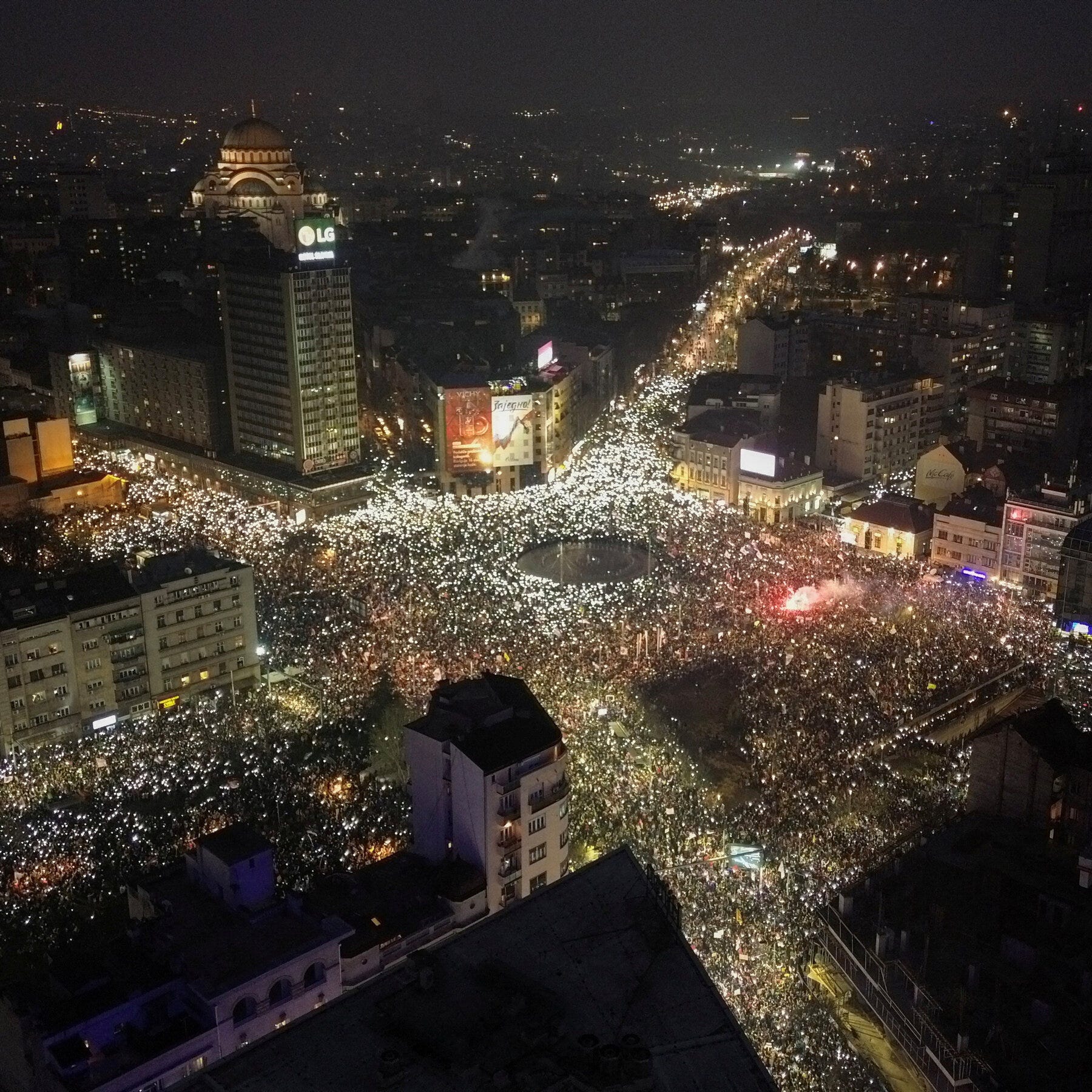
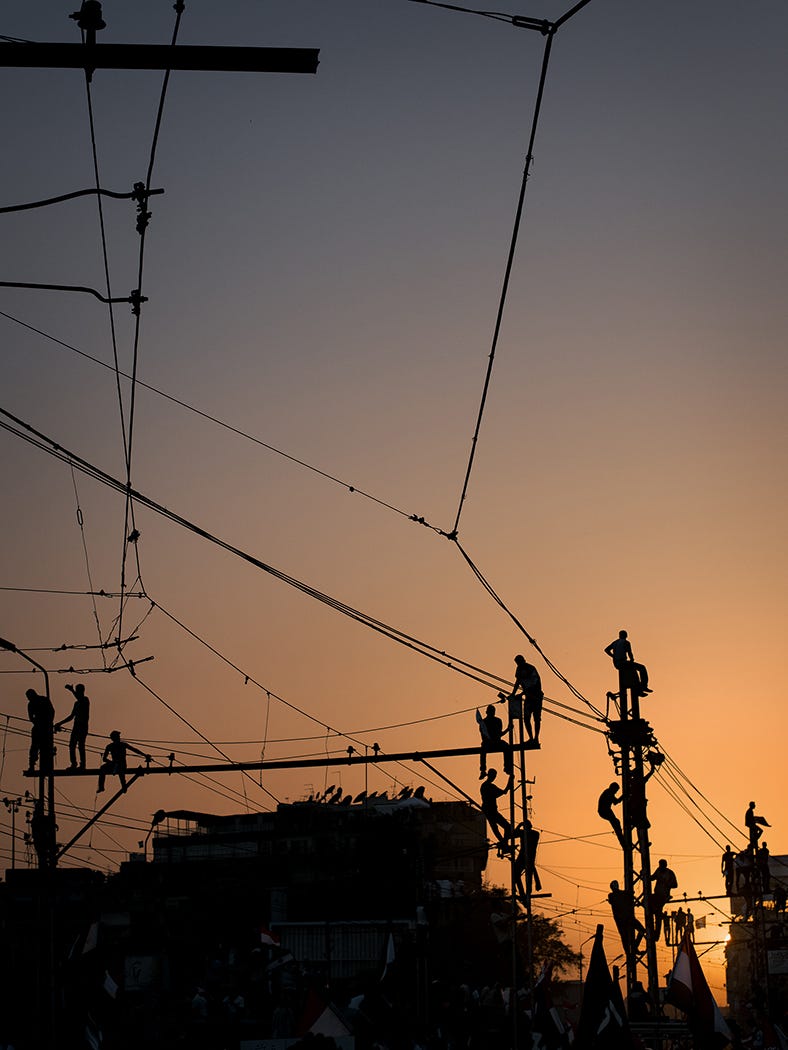
A quick note on the pictures reproduced in this post: the first photograph was taken from a New York Times article about the protest movement in Serbia. All the others are from The Axe Will Survive the Master, courtesy of MACK Books and Matthew Connors.
“In the end, it is always the ruling classes, bourgeois certainly, but above all aristocratic, that long mourn the empires, and their grief always has a stagey quality to it.”
Benedict Anderson, Imagined Communities
In March 2024, for the second time I worked as an artist in residence at the Academy of Arts, University of Novi Sad in Serbia. It was an amazing experience, just like my first, and cemented a deep friendship I have with Dubravka Lazić (most of her friends call her Duda). For a little over a year after this last visit, Duda and I exchanged daily text messages – sharing ideas about photography, my contagious excitement for learning about the Balkans, our favorite Scorsese films, America’s descent into fascism, and of course our children and dogs.
On November 1, just five months after I left Novi Sad, I received an urgent, panicky text from Duda. She told me that a large concrete canopy at the train station collapsed, sending the city into chaos. At this point, no one had any idea how many people were trapped under its rubble. Duda was in a panic; her husband was at the train station that morning, and she had no idea if he was safe. Soon after, she did confirm Žarko left the station before the collapse, but she also told me that the citizens of Novi Sad were mobilizing a response, to protest the government corruption that led to this tragedy.
The next few weeks I heard from Duda multiple times a day, updates on a growing protest movement against Aleksandar Vučić’s corrupt regime. I felt an immediate, personal connection – some of the students and faculty I’d worked with were now organizing the protests, and just six months earlier, I’d waited for a taxi under that same canopy. Over the following months, this grassroots response spread across Serbia, gathering support until it started to feel like a moment of inevitability. Through Duda and other artists I connected with on social media, I felt I had a clear window onto a unique moment in history in one of Europe’s most complicated countries. The pictures I saw on social media – including some of the best drone photography I’ve seen – were made more vivid by Duda’s texts. Indeed, on March 15, 2025, these connections allowed me to witness the largest protest in Serbian history happen in real time. Hundreds of thousands took over Belgrade in peaceful protest, shutting down the city in an event that was filled with joy and respect; they even cleaned the streets as they left, truly practicing the campsite rule (take only pictures, leave only footprints).
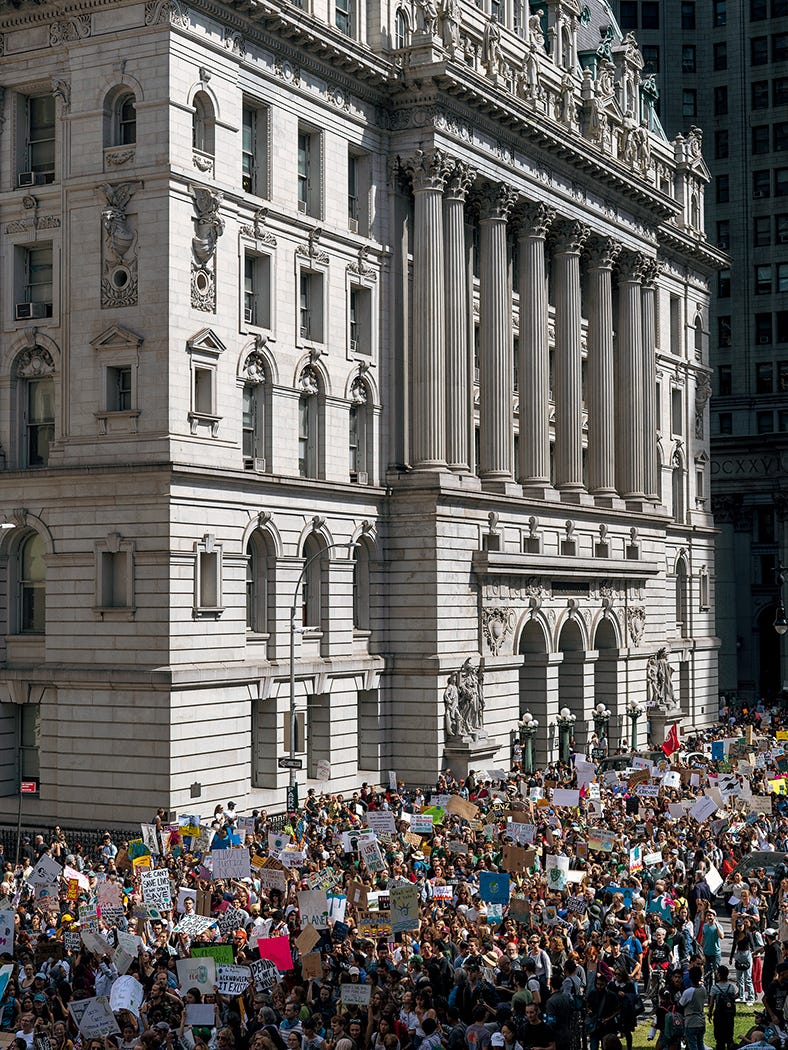
The reelection of Donald Trump in 2024 brought this all closer, as I too could no longer stay silent when confronted with such shameless corruption. Indeed, today, I think of these protests, No Kings and the Serbian Blockades, as reflecting similar values; they denounce tyranny and advocate for social equality. This strengthens my belief that we share a struggle against tyranny, a crisis at the core of being human, and that political protest can be a bridge between cultural differences. These ideas were all confirmed again when I discovered The Axe Will Survive the Master, the new photobook from Self Publish Be Happy and Matthew Connors.
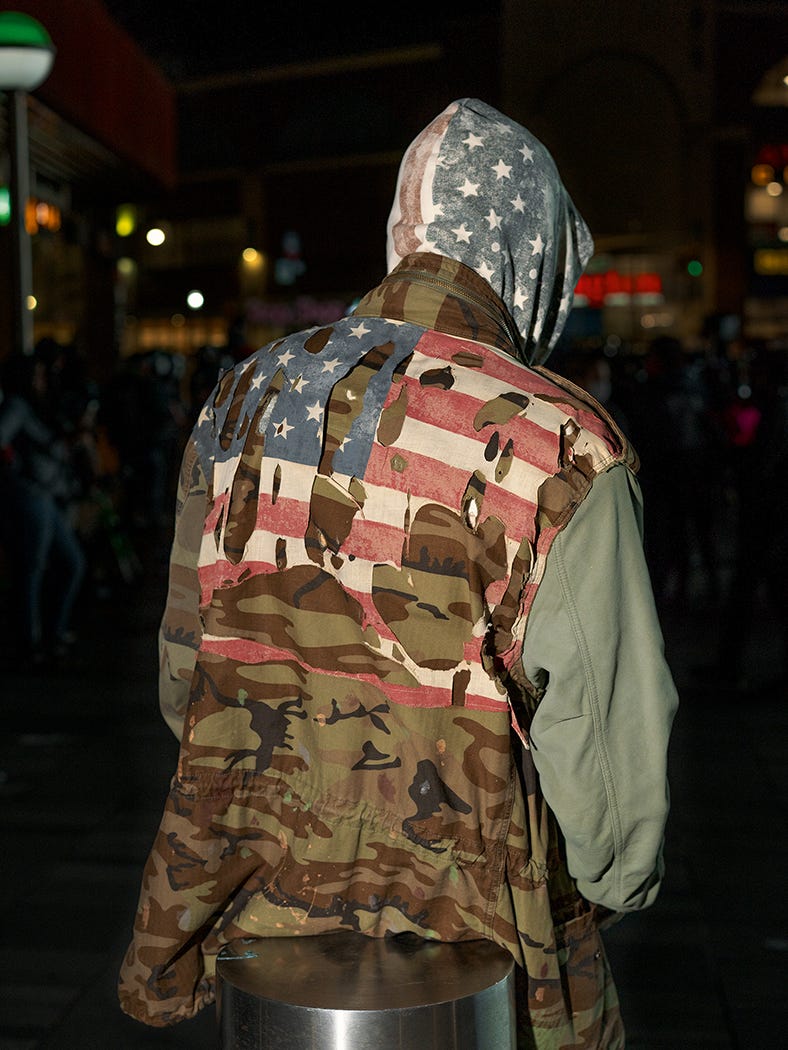
SPBH describes the book as “an oblique record of life on a faltering planet,” developed over 12 years as Connors documented political events around the globe, and in places as different as Hong Kong, Ukraine, North Korea, and the United States. The Axe opens with two photographs of green and blue lasers, one totally abstract, the other casting an ominous light on a robust barrier placed to defend an office high-rise. These are followed by a list, numbered I-X, that I originally understood as chapter titles but now think of them as something more like poetry or cantos, abstract guideposts or cairns that help guide a path through the photographs. However you read them, there is a clear narrative structure to The Axe, and the words are rich and evocative – A Box of Savage Boredom, Salami Tactics, and A Caucus of Shadows.
The opening pictures are as understated as they are compelling. At first glance, one might look at them and wonder, ‘Where is the demonstration?’ There are pictures of gassed protestors, riot-clad police officers, and burning effigies, but these come much later in Connors’ narrative. First, he walks us through the quiet peripheries – an ATM tagged with graffiti, a wall of blank post-it-notes, two men placing a dry-erase board in a seemingly empty room, and the delicate rain of paper confetti. These pictures feel full of more questions than answers and are loaded with tension and anticipation. One gets the feeling Connors went to each of these countries to witness powerful social events but first had to figure out how to get to the right street corner. Instead of a predictable drama and romance of a street protest, he opts to load these pictures with the tension of anticipation, entering the unknown and hoping to witness radical expressions of freedom. This introduction to The Axe Will Survive the Master is full of something that feels like patient adrenaline, life on the cusp.
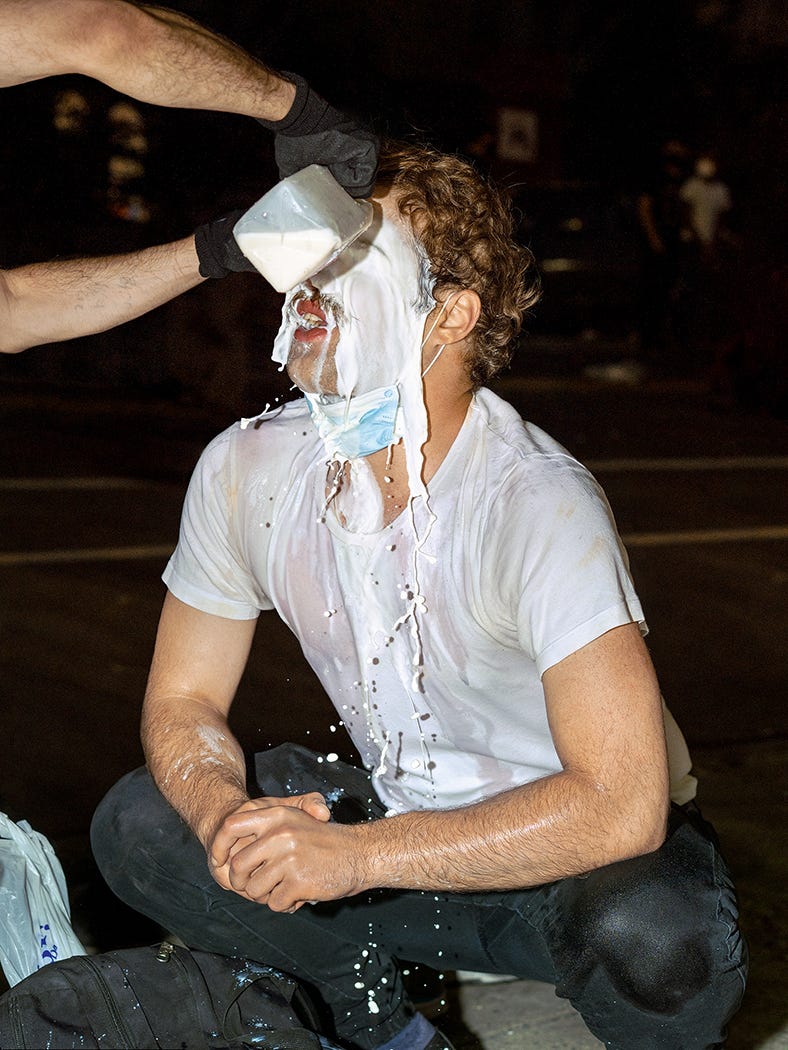
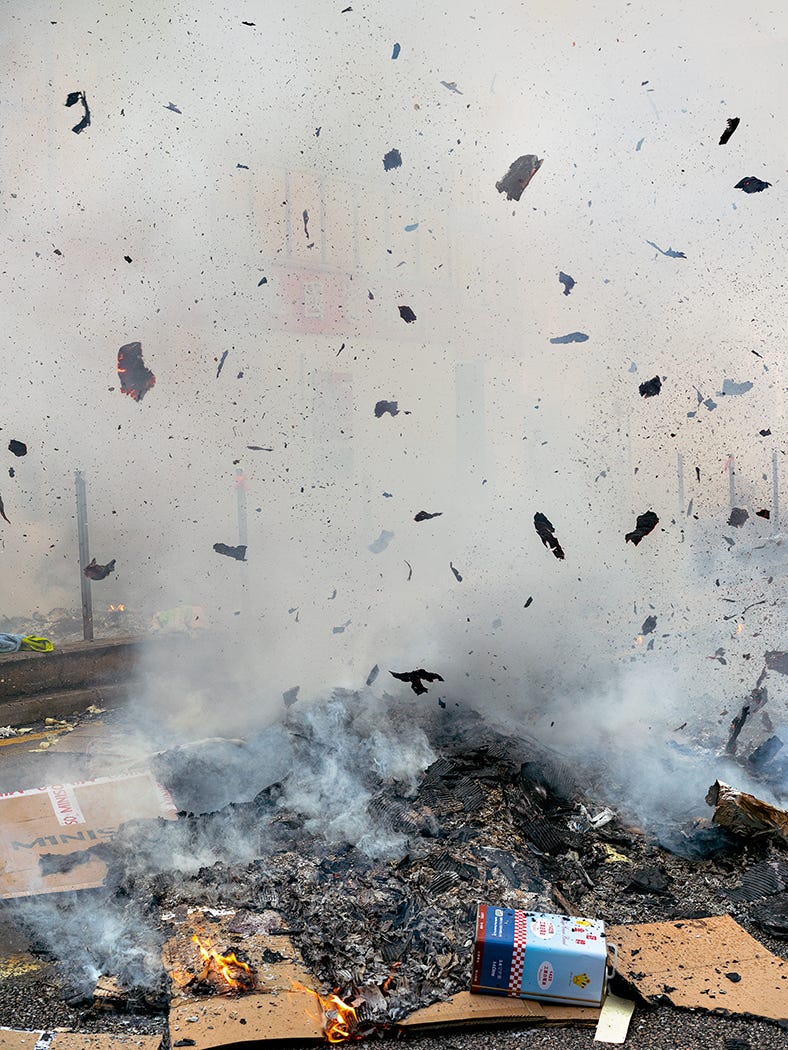
Once we get to the heart of these demonstrations, this anticipation gives into chaos. Connors walked streets clouded in gas and captured scenes of protestors urgently washing their eyes with milk, a rabbit’s head recently removed from its body, and buildings ravaged by destruction and anger. These photographs demonstrate an incredible sense of composition – the pictures are tight, dense rectangles, fully balanced and effortless but still pushing hard against the edges of the frame (a perfect visual metaphor for political demonstration). One also gets the sense that Connors is pursuing an elusive expression that fits somewhere between documentarian, participant, and poet: at times his pictures feel journalistic, others more distant and ironic, and some as twenty-first century allegories. Regardless, Connors’ photographs feel driven by profound curiosity, the best tool for any photographer.
This frenetic narrative quickly subsides, and these pictures are followed by a few with a slower pace – a wooded area in early spring, a haze drafting from rooftops and back to the sky, a neglected garden, a torrential rain (washing away the day’s events?), and an unknown building along some unknown bank, emanating light in a way I can only liken to Gregory Crewdson (but without the heavy-handed staging). There follows an entirely unexpected short story, “The Knotted Alliance,” written by Connors. Like anyone perusing a photobook, my first few passes through, I just studied the photographs and saved the text for later. I was anticipating a scholarly essay about social protest, but instead, his story describes a small group of people outside a museum setting up a folding table. It seems they are there to collect signatures, but the feeling is rendered opaque with laconic but lascivious descriptions – “A pair of graduate students performed an argument about desire lines and the late-life mortality,” “vermillion pens,” “an epigraph of pre-Socratic times,” and “a phalanx of international correspondents.” The short story is again followed by an unexpected series of pictures – abstract, full-bleed pictures of green and blue lights that feel cosmic, a micro/macrocosmic representation of kinetic energy.
I had the chance to speak with Connors on the phone, to learn more about his work and the making of this book. We have some shared history – Connors is a Professor of Photography at the Massachusetts College of Art, my alma mater, joining the faculty shortly after I completed my MFA. We talked about our shared commitment to a pure, lens-based way of seeing; the differences between tribalism and nationalism; the iTi (Image-Text-Ithaca) summer workshops; Benedict Anderson; and the unexpected beauty of Yugoslavia’s concrete monuments. Connors also talked about the creativity he saw at the core of all these demonstrations, something that resonated deeply with things I learned from Duda. I came away with an incredible sense for the book, clearly able to understand Connors as a photographer with incredible curiosity and deeply held convictions.
I also learned a little about the making of The Axe. Connors told me it “emerged from the ashes of four others,” as originally, he developed mock-ups to represent his experiences in each of the individual countries. It’s easy to understand these as necessary background for this book, but the work feels more significant by melding them into one narrative. Like the conclusions I reached during my correspondence with Duda – understanding the Blockades and No Kings as representing similar responses to abusive and totalitarian visions – Connors opted for something that feels much more relevant to a global crisis. At least in my mind, The Axe Will Survive the Master will be understood as one of the great photobooks of our time, a clear, poetic, and dispassionate view of a world on the brink.